Parents' Guide To Oral Sedation for Kids: Basics & Comparison With Liquid & IV Sedation
Dental treatments that require a single visit are tolerable for kids, but what if the treatment is invasive and requires multiple visits? Your child will absolutely not sit calmly when invasive procedures are required to get oral health under control.
The child’s memory of dental visits also contributes, and maybe the last time ended with tears before the dentist even picked up a tool. Maybe your child has sensory sensitivities that make a routine cleaning genuinely difficult. Maybe they are two years old and simply cannot hold still long enough for treatment to be completed safely.
None of that is unusual. Cooperation challenges and dental anxiety are among the most common reasons families arrive at a pediatric practice needing a different approach. Oral sedation for kids is a well-studied, guideline-supported clinical tool for exactly these situations, and it has been used safely in pediatric dentistry for decades.
Sedation is often not the only option for pediatric procedures, and we recommend it only for treatments that use tools that might scare kids. This guide covers every basic information about oral sedation & its comparison with liquid and intravenous sedation options.
When Behavioral Guidance Alone Is Not Enough
Pediatric dentists specialize in applying behavior management techniques such as tell-show-do, voice control, positive reinforcement, and more. These work for most children. But for a real subset of patients, no oral care technique changes the outcome. Pushing through treatment without sedation in those cases does not build resilience. It makes the next appointment harder.
1. Very Young Children Can’t Be Told What To Do
Children under three cannot cooperate with any procedure that requires stillness. A two-year-old who needs a filling does not understand why they need to hold still, and they cannot choose to override a fear response at will. Sedation is not a shortcut here. It is what makes safe treatment possible at all.
2. It’s Hard To Explain A Process To Children With Documented Dental Phobia
A child with a genuine phobia does not improve through repeated exposure to unmanaged distress. Often, the fear is formed after a previous difficult experience, and forcing treatment on top of it compounds the avoidance. Each visit handled that way tends to make the next one worse.
3. Children With Special Healthcare Needs Need Extra Care
Children with special abilities, autism spectrum disorder, cerebral palsy, ADHD, or sensory processing disorders frequently cannot receive care through behavioral techniques alone. The American Academy of Pediatric Dentistry (AAPD) addresses this population specifically in its sedation guidelines because standard behavior management approaches often do not transfer to these patients.
The Role of Nitrous Oxide Sedation in Pediatric Dentistry
This is the most commonly used sedative agent in pediatric dentistry. Its pharmacology is well understood, it clears fast, and it requires no fasting before the appointment. For a child with mild to moderate anxiety who will tolerate a nasal mask, it is usually the right place to start.
How It Works
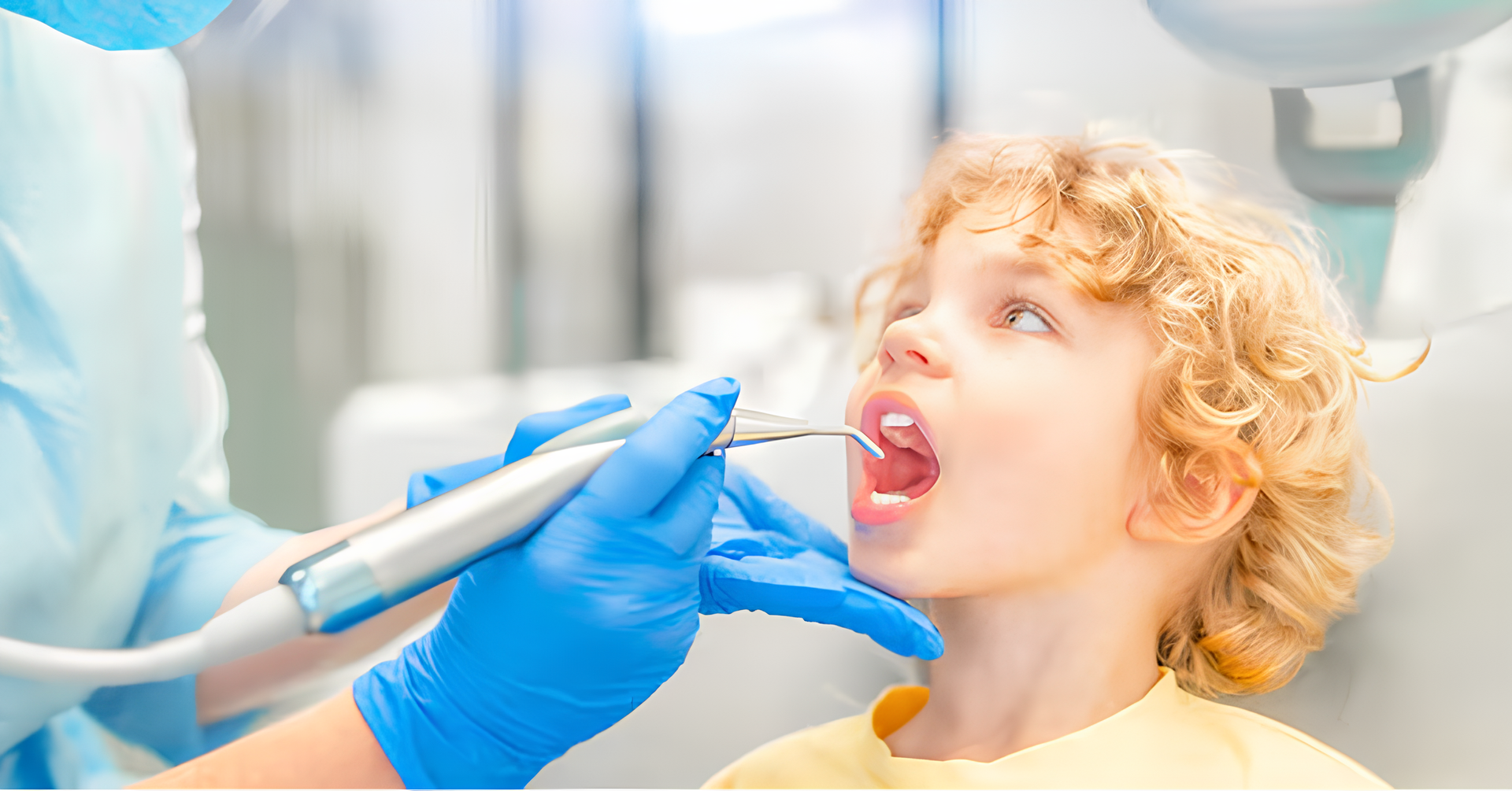
A small mask fits over the child's nose, and they breathe a calibrated mixture of nitrous oxide and oxygen throughout the procedure. A mild, relaxed, or slightly euphoric sensation sets in within three to five minutes. The child stays fully awake and responsive the entire time.
Once the mask comes off and the child breathes room air for a few minutes, the effect clears completely. No grogginess, no home recovery. Most children are back at school the same afternoon. That fast offset is the main reason the role of nitrous oxide sedation in pediatric dentistry is so well established for routine and moderately complex procedures.
Candidacy
The AAPD classifies nitrous oxide as minimal sedation and considers it safe during the procedures. Children with active nasal congestion, a history of ear surgery, middle ear infections, or certain pulmonary conditions are not candidates. Also, very young children are also excluded from the candidates for this sedation option, as they will not accept a nasal mask. Nausea and vomiting are possible side effects with this sedation option, so a light meal before is recommended, not a heavy one.
The Role of Oral Sedation in Pediatric Dentistry: Moderate Anxiety Cases
When nitrous oxide is not enough, because the child is too young, the anxiety is too high, or the procedure runs too long, oral sedation for kids is the next step most pediatric dentists consider. A sedative given by mouth before the procedure produces a deeper state of relaxation without requiring an IV or inhaled delivery system.
Oral sedation in pediatric dentistry is a feasible choice in the moderate anxiety range: children who need more than gas provides but whose clinical picture does not yet call for the precision of IV delivery. This liquid form of medication is also suitable for younger children who cannot swallow pills.
Medications Used in Oral Sedation for Kids
Midazolam (Versed) is the most widely used agent for oral sedation in pediatric dentistry. It is a benzodiazepine that produces anxiolysis, light sedation, and anterograde amnesia, meaning the child typically has little to no memory of the procedure. Onset is 15 to 30 minutes, and the duration is predictable enough to plan procedure timing around.
Hydroxyzine is an antihistamine with mild sedative properties. It works alone for low-level anxiolysis or in combination with midazolam. It is not the right choice when the clinical goal is deeper sedation.
Dexmedetomidine produces deeper sedation with some analgesic effect. It is used when midazolam alone falls short, particularly for children with special healthcare needs.
Drug selection and dosing are weight-based and shaped by the child's full medical history, current medications, allergies, and how long the procedure is expected to run. See our dental services for the procedures most likely to involve a sedation recommendation.
What to Expect During the Appointment
After receiving oral sedation for kids, the child typically becomes drowsy within 15 to 30 minutes. Some lose interest in their surroundings and fall asleep. Many stay awake but deeply relaxed. Memory of the appointment is often limited or absent afterward, particularly with midazolam.
The AAPD and the American Society of Anesthesiologists require no solid food for six hours before moderate sedation and no clear liquids for two hours before the procedure. These are not adjustable guidelines. After the appointment, drowsiness and mild disorientation may persist for several hours. The child stays home under adult supervision for the rest of the day.
The Role of Liquid Sedation in Pediatric Dentistry Addresses
The role of liquid sedation in pediatric dentistry addresses is about delivery format, not clinical depth. Midazolam and hydroxyzine in flavored liquid form produce the same therapeutic effect as their tablet versions: the difference is that young children who will not swallow a tablet will accept a liquid. That single formulation difference is what extends the age range for oral sedation in kids.
Liquid sedation in pediatric dentistry has the same fasting requirements, monitoring standards, and post-appointment recovery expectations as any other oral sedative. It is oral sedation in a form that children can actually take.
The Role of IV Sedation in Pediatric Dentistry in High-Complexity Cases
For children who cannot be managed through inhaled or oral routes, intravenous sedation is the most controllable ambulatory option available outside a hospital. The role of IV sedation in pediatric dentistry is limited to a narrow but clearly defined set of cases where real-time dose control is not optional; it is clinically necessary.
How It Works
A small IV catheter, usually placed in the arm or hand, delivers sedative and analgesic medications directly into the bloodstream. The drugs act immediately, and the dose is titrated in real time, so the provider continuously controls both depth and duration. Oral and inhaled routes cannot replicate that level of precision.
Children under IV sedation are generally in a state of deep sedation. They may not respond to verbal communication and require active airway monitoring throughout. A qualified anesthesia provider must be in the room. Oxygen saturation, heart rate, blood pressure, respiratory rate, and end-tidal CO2 are monitored continuously rather than checked periodically.
When It Is Appropriate
IV sedation pediatric dentistry is appropriate when lighter options have not worked, when the procedure demands precise dose control given the child's medical history, or when behavioral limitations make less controllable methods unsafe. It is not a first-line option.
The child's pediatrician is typically consulted beforehand. The pre-sedation evaluation includes a full airway assessment in addition to the standard medical and medication review.
Day-of Expectations
No solid food for six hours. No clear liquids for two hours. The appointment takes longer than a standard visit because preparation, monitoring, and in-office recovery must be completed before the child is discharged. Stable vital signs and a return to baseline consciousness are both required before leaving. A responsible adult drives them home, and close supervision continues through the rest of the day.
Sedation Safety: What the Guidelines Establish
Parents who ask about sedation safety are asking the right question. The direct answer is that pediatric sedation has a strong clinical record when the AAPD's guidelines are followed, and those guidelines are specific, not general.
They set requirements for pre-sedation oral health screening, provider credentials, monitoring equipment, documentation, and rescue protocols. Facilities performing pediatric sedation are expected to meet all of them.
The most serious risk across sedation types is respiratory depression. That is why continuous pulse oximetry, capnography (where applicable), and cardiovascular monitoring are required throughout moderate and deep sedation procedures. Spot checks are not sufficient. Emergency equipment must be present, and the team must be trained to use it.
Children with active upper respiratory infections get rescheduled. Airway congestion raises risk at any sedation depth. Delaying the appointment is the right call, even when it is inconvenient.
Preparing Your Child for the Appointment
What you tell your child beforehand has real effects on how they walk in. Keep framing honestly and age-appropriately, and resist the urge to oversell how easy it will be.
For younger children, simple, concrete measures work: the dentist has something that helps them feel sleepy, so the appointment goes quickly and does not hurt. Skip any description of needles, instruments, or procedures. Do not introduce concerns they did not already have.
For older children and teenagers, a bit of directness goes further than vague reassurance. Tell them the medication will help them relax, they probably will not remember much of it, and that feeling nervous is completely normal. Name the feeling rather than brushing past it.
Before the appointment:
- Follow fasting instructions exactly, no exceptions
- Dress your child in loose clothing with easy sleeve access for monitoring equipment
- Bring a comfort object if they use one
- Plan to stay at the office for the full appointment, including recovery time
- Arrange a second adult for home if deep sedation is involved
Sedation Options at a Glance
| Sedation Type | AAPD Classification | Route | Child Awake? | Same-Day Recovery | Best Fit |
|---|---|---|---|---|---|
| Nitrous Oxide | Minimal | Inhaled | Yes, fully | Yes, within minutes | Mild anxiety, cooperative children, shorter procedures |
| Oral / Liquid Sedation | Minimal to Moderate | Liquid or pill | Usually, but drowsy | Partial: home rest required | Moderate anxiety, young children, moderate-length procedures |
| IV Sedation | Moderate to Deep | Intravenous | May be unresponsive | In-office recovery before discharge | Severe anxiety, complex treatment, special healthcare needs |
| General Anesthesia | General | IV or inhaled | No | Hospital or surgical center | Cases requiring full unconsciousness |
Stop Delaying Treatment. Book a Sedation Evaluation at Next Level Pediatric Dentistry.
Dental anxiety does not go away on its own. Postponed treatment almost always creates a larger clinical problem than the one that could have been addressed in a timely manner. Oral sedation for kids exists because some children genuinely cannot receive complete dental care any other way, and the right sedation method is what gets them there.
At Next Level Pediatric Dentistry, every child gets an individual pre-sedation evaluation before any recommendation is made. AAPD guidelines govern every sedated appointment. Parents go through the full process with the clinical team before anything gets scheduled.
Frequently Asked Questions
Is oral sedation for kids safe?
Absolutely safe when administered by trained providers in accordance with AAPD protocols. We recommend visiting for a regular consultation after every sedated appointment to ensure we’re monitoring adverse effects or reactions before and after treatment. Oral sedation is not mandatory for any non-invasive dental procedures.
What is the role of liquid sedation in pediatric dentistry?
It delivers the same sedative agents as oral tablets in a flavored liquid form that young children will actually accept. Midazolam in liquid form is the most common agent, producing anxiolysis, light sedation, and typically limited memory of the procedure.
Will my child remember the appointment after oral sedation for kids?
Often not. They might remember they visited a dentist, but will not have any memory of the invasive procedure. Midazolam, the standard agent in oral sedation for kids, causes anterograde amnesia in many children. Most have little to no memory of the procedure once it is over.
What makes IV sedation different from oral sedation in pediatric dentistry?
This intravenously administered medication, IV sedation, allows real-time numbness required for the procedure. Oral sedation is absorbed through the GI tract, making onset and depth less predictable. IV sedation is commonly used in more complicated surgeries for a pain-free experience for kids.
Can my child eat before a nitrous oxide appointment?
A light meal is generally fine, since nitrous oxide provides minimal sedation. Most dentists advise against a heavy meal because nausea is a possible side effect. Follow your dental office's specific pre-appointment instructions.
How does the dentist decide which sedation option fits my child?
The pediatric dentist looks at age, weight, health history, anxiety level, current medications, and planned treatment before recommending anything. There is no universal answer. A pre-sedation consultation is the right starting point.